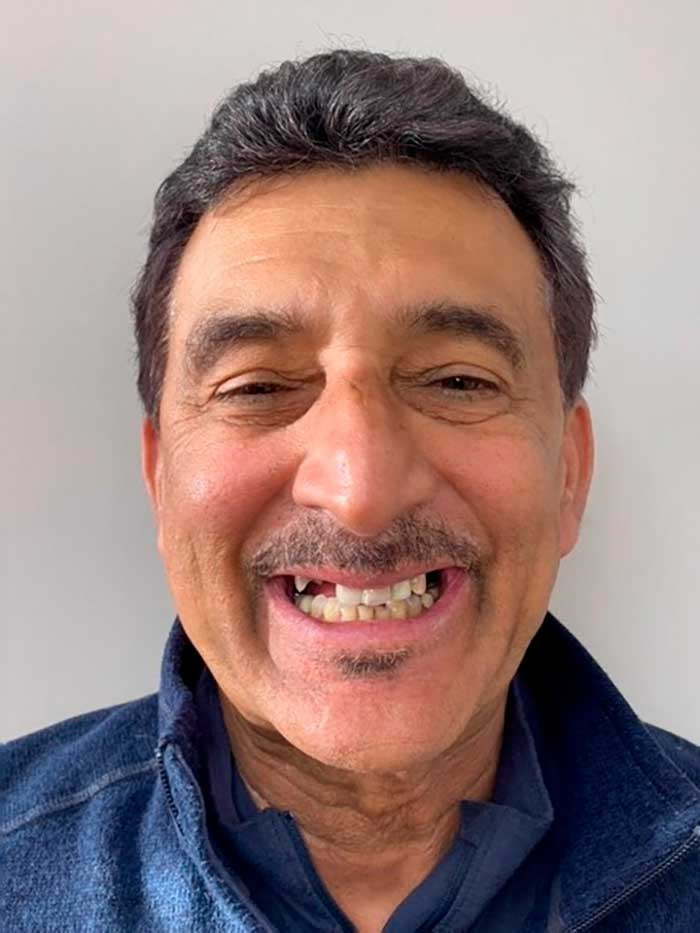
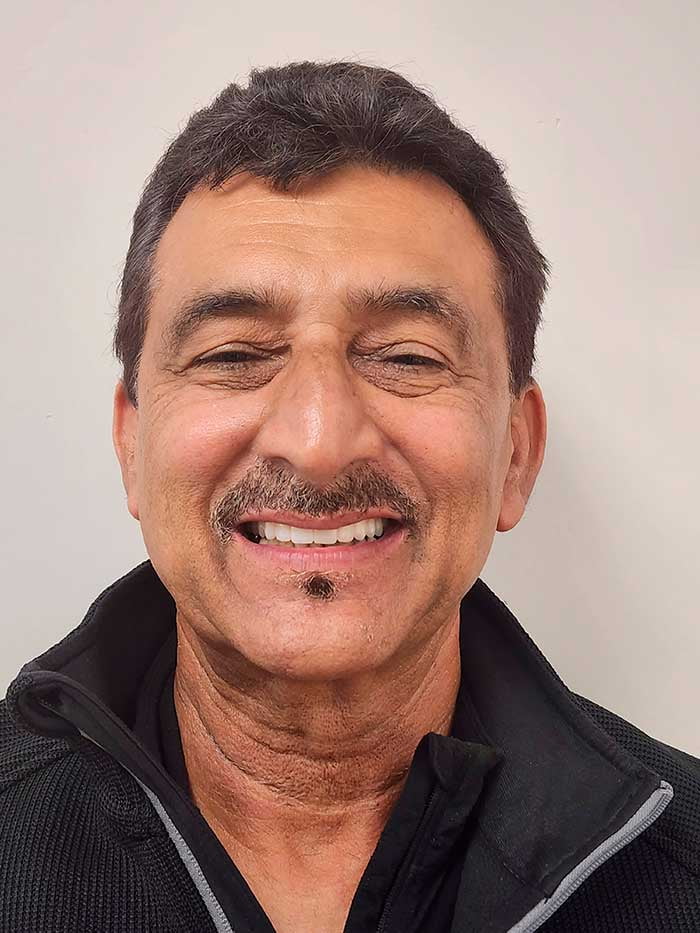
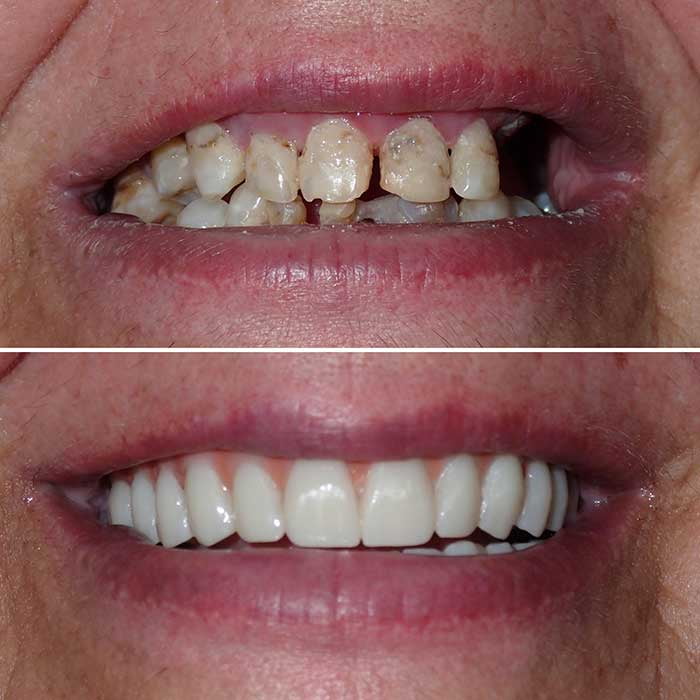
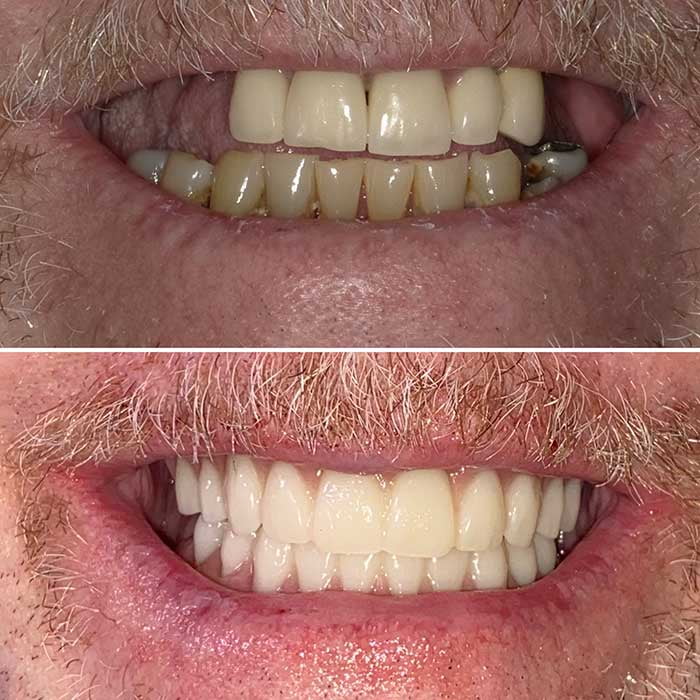
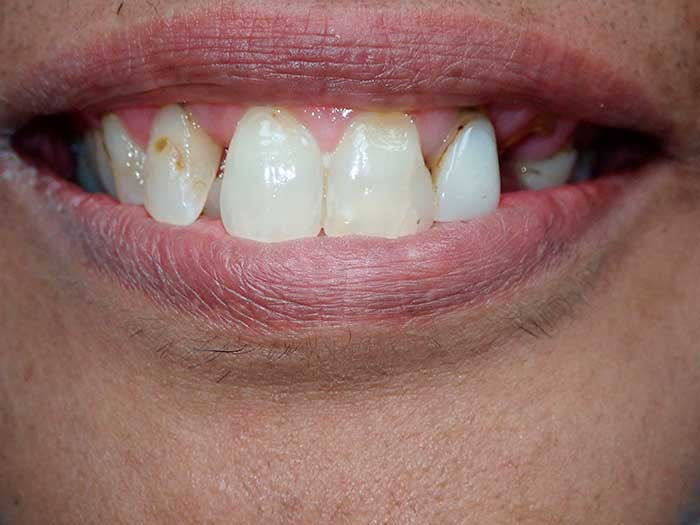
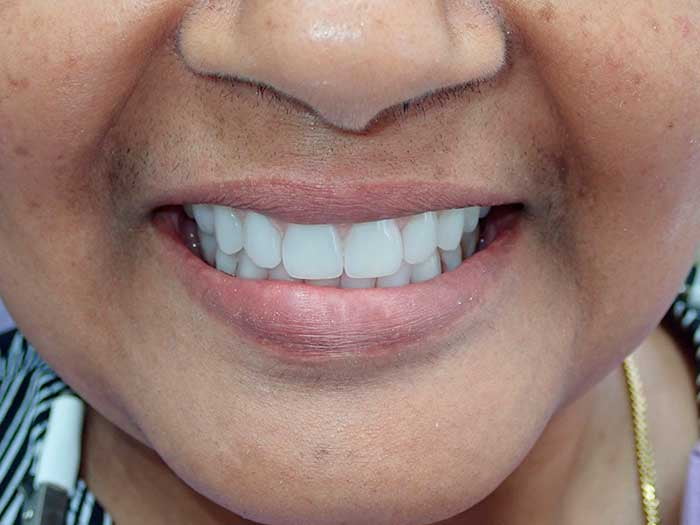
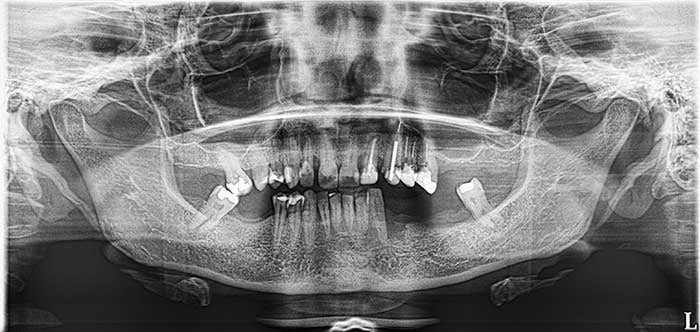
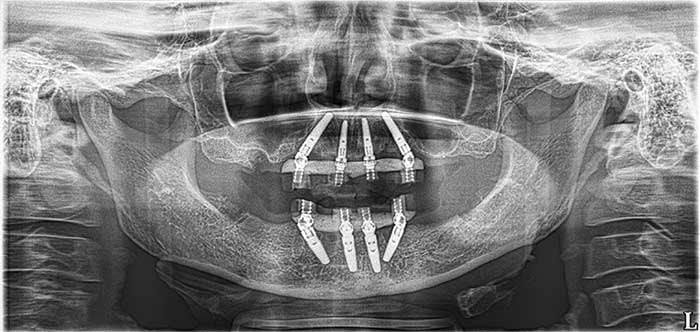
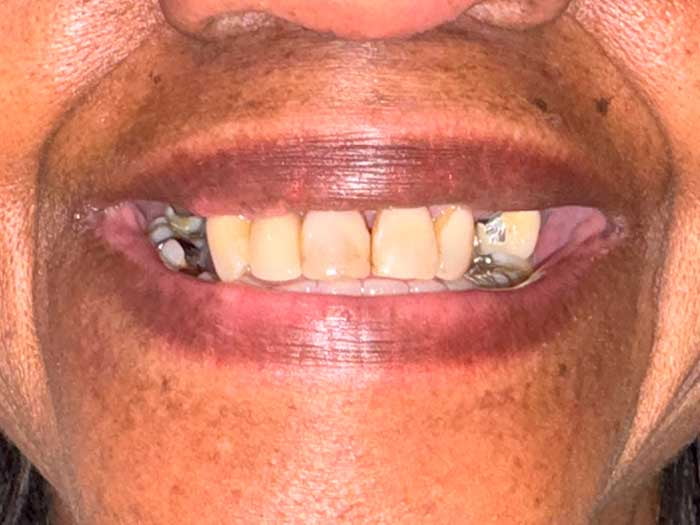
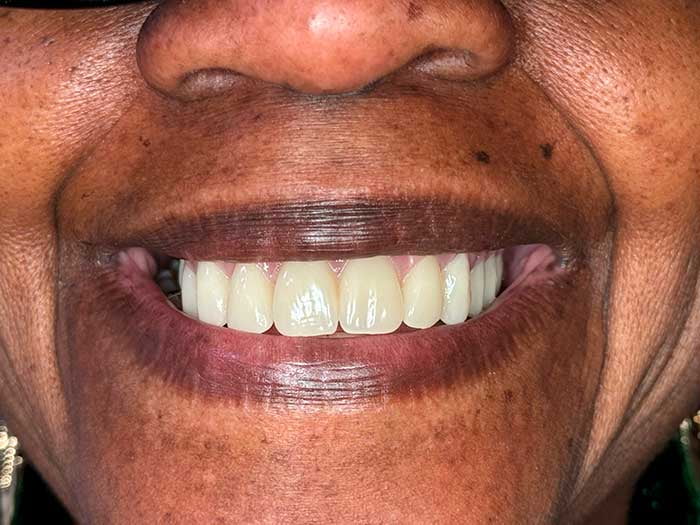
All-on-4 Dental Implants in North York
A Structured Solution for Full-Arch Tooth Loss
Losing multiple teeth or living with dentures that no longer feel stable is not just a dental issue. It affects how you eat, speak, and interact with people every day.
All-on-4 is not about getting “new teeth in a day.” It is about replacing an unstable situation with a fixed, structured solution you can rely on in the long term.
At Bayview Smile Centre on Bayview in North York, we use full-arch implant treatment to restore an entire row of teeth with a fixed bridge supported by strategically placed implants. For the right patient, this means moving away from removable dentures or failing teeth toward something that feels significantly more stable and predictable.
Why Patients Start Looking for All-on-4
Most patients do not begin this search because they want implants. They start because something has already stopped working.
- Dentures that move or cause discomfort
- Teeth that continue to break down despite treatment
- Difficulty chewing normal food
- Avoiding social situations due to insecurity
- Repeated dental work with no long-term resolution
At a certain point, the question changes from “How do I fix this tooth?” to “What is the most stable way to fix everything?”
That is where full-arch implant treatment becomes relevant.
What All-on-4 Actually Solves (And What It Doesn’t)
All-on-4 is often described in simple terms, but the reality is more nuanced.
What it solves
- Replaces an entire arch of teeth with a fixed structure
- Eliminates movement associated with removable dentures
- Reduces the need to treat teeth individually when the prognosis is poor
- Provides a more stable chewing experience
What it does not do
- It does not “restore natural teeth.
- It does not eliminate the need for maintenance
- It does not guarantee identical results for every patient
This distinction matters. The goal is not perfection. The goal is predictability and stability over time.
What Is All-on-4 / Teeth in a Day
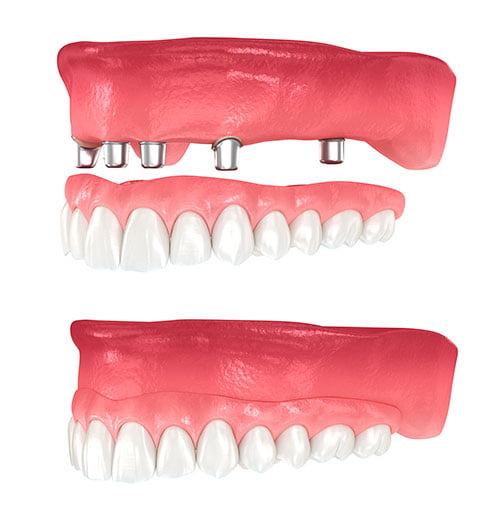
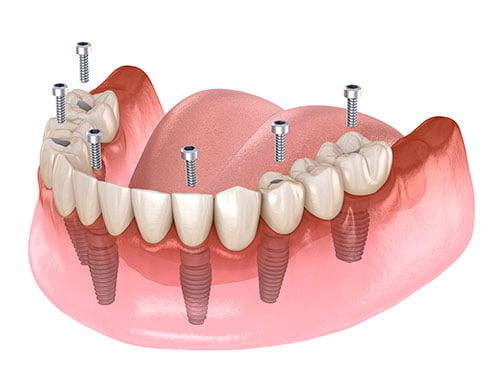
All-on-4 is a method of supporting a full-arch bridge using a limited number of implants (typically 4–6).
Instead of placing one implant per tooth, implants are positioned strategically to:
- maximize available bone
- support a full-arch prosthetic
- reduce complexity compared to traditional approaches
Teeth in a Day” refers to the ability, in many cases, to:
- remove failing teeth
- place implants
- Attach a fixed temporary bridge within the same surgical phase.
But here is the part that many pages do not explain clearly:
- The final result is not completed in one day
- The first bridge is part of a staged process
- Long-term success depends on healing, design, and follow-up
This is a treatment plan, not a one-day procedure.
Who Is a Good Candidate for All-on-4 Dental Implants
This is not a cosmetic upgrade. It is usually a last stable solution before full tooth loss becomes unavoidable.
Strong candidates typically
- have multiple failing teeth with a poor long-term prognosis
- are already wearing dentures or are about to need them
- want a fixed (non-removable) solution
- are ready for a structured treatment process
Situations where caution is needed
- expectations based on “instant smile” marketing
- untreated periodontal disease
- complex medical factors affecting healing
The most important step is not the procedure.
It is the decision whether this is the right direction at all.
The Real Difference Between All-on-4 and Dentures
Most competitor pages oversimplify this. The difference is not just “fixed vs removable.” It is how your daily life changes.
| Factor | Dentures | All-on-4 |
| Stability | Can shift or loosen | Fixed in place |
| Chewing confidence | Limited | Significantly improved |
| Speech | May require adaptation | More natural |
| Maintenance | Removal required | Fixed, but still requires care |
| Psychological comfort | Often lower | Typically higher |
Patients usually do not choose All-on-4 because it sounds advanced. They choose it because they are tired of adapting their life to their teeth.
What the Treatment Actually Involves
(Step-by-Step Reality)
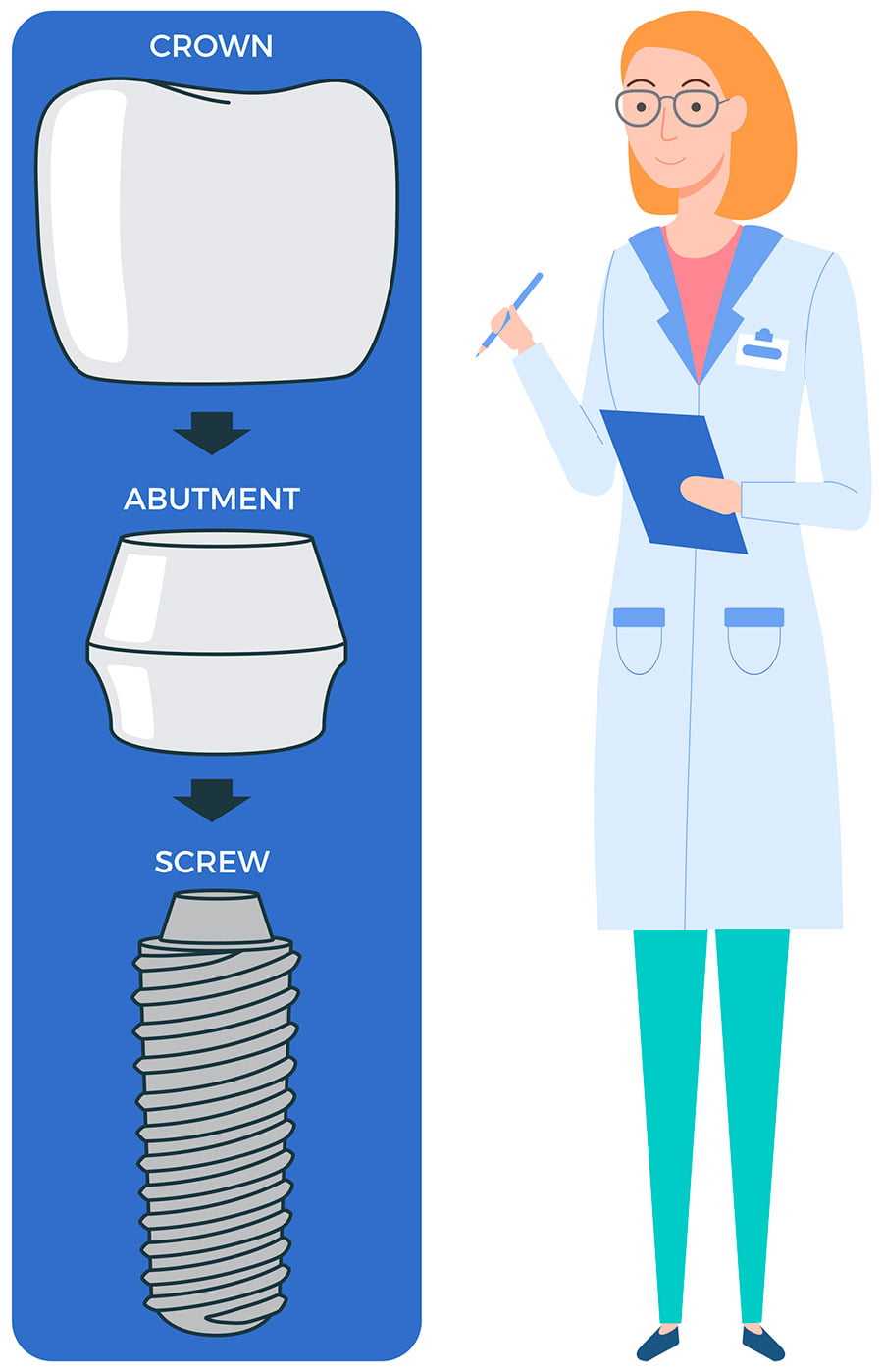
We evaluate bone, teeth, bite, and expectations. This determines whether All-on-4 is appropriate.
Implants are placed strategically. Failing teeth are removed if necessary.
In many cases, a fixed temporary bridge is placed the same day. You leave with teeth—but not the final version.
This is where success is determined. Implants integrate with bone.
A more refined, long-term prosthesis is created.
Most failures in expectations occur when patients think Step 3 is the final result.
Recovery After All-on-4 Dental Implants
Recovery after All-on-4 is a controlled healing process that directly affects how well the implants integrate and how stable the final result will be.
What to expect in the first days
- Mild to moderate swelling and soreness
- Temporary discomfort, especially if extractions were performed
- Need to follow prescribed medications and care instructions
During the healing phase
- A soft-food diet is required to avoid pressure on the implants
- A fixed temporary bridge is used, but it is not intended for full chewing function
- Careful oral hygiene is essential to support healing
Over the following weeks and months
- Implants gradually integrate with the bone (osseointegration)
- The chewing function is restored progressively, not immediately
- Follow-up visits are used to monitor healing and make adjustments if needed
Same-day teeth improve appearance and stability right away, but full strength and long-term function develop over time.
Longevity: How Long Does All-on-4 Last?
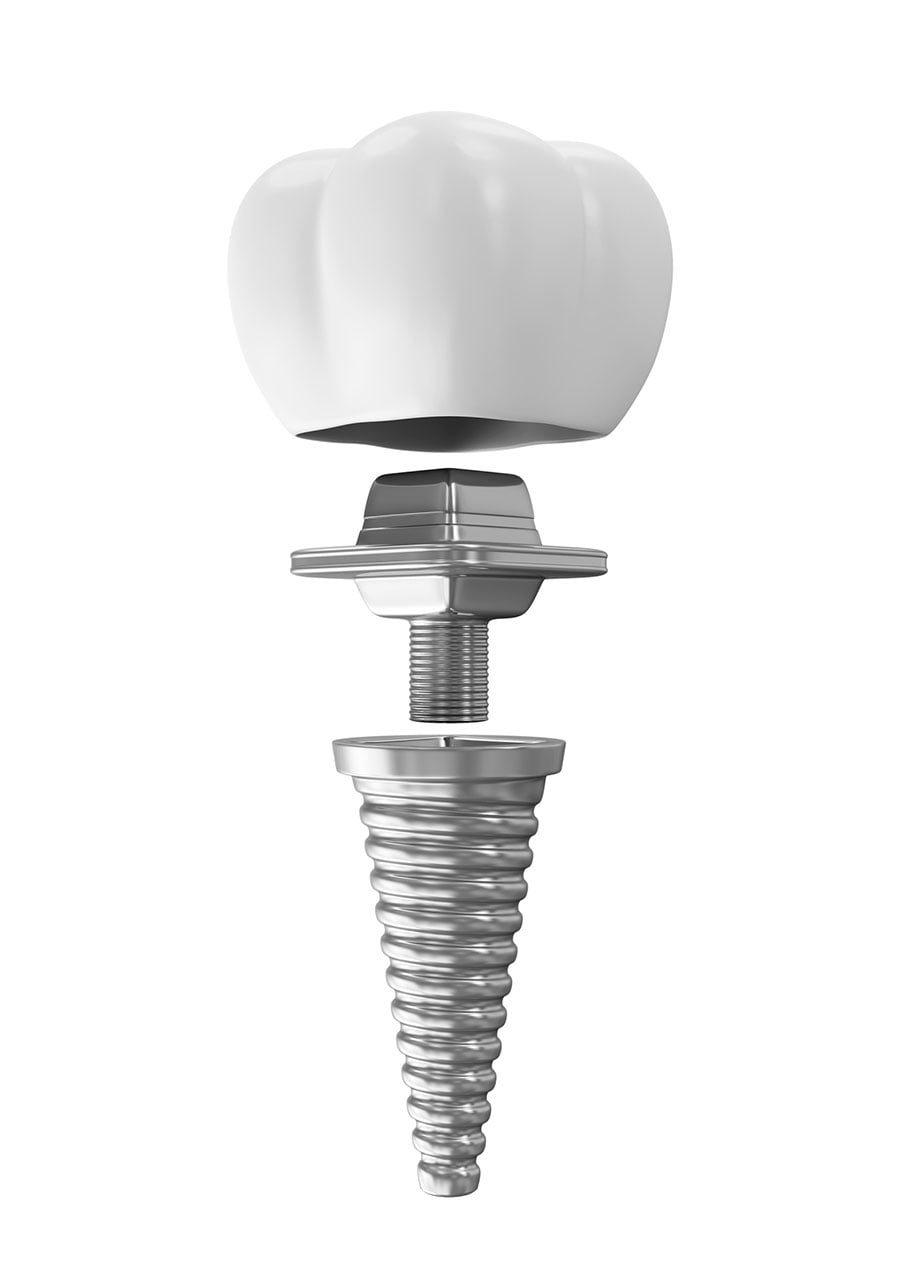
Long-term results with All-on-4 depend not only on the procedure itself, but on how well the implants and prosthesis are maintained over time.
Key factors that influence longevity include:
- consistent daily oral hygiene
- control of bite forces (such as grinding or clenching)
- regular professional check-ups and maintenance
- natural wear of the prosthetic bridge over time
The implants are designed to serve as a stable, long-term foundation. The bridge attached to them is also built to be durable, but like any dental restoration, it may require maintenance or eventual replacement.
A realistic expectation:
With proper care and regular follow-up, All-on-4 can provide a stable, long-term solution—but it is not a one-time procedure that requires no future attention.

Cost of All-on-4 in North York: What Actually Matters
(647) 931-2477
Patients often focus on the number first. But cost without context is misleading.
What actually determines the value of treatment:
- What is included (temporary and final bridge)
- How many implants are required
- Complexity of the surgical phase
- Long-term maintenance and follow-up care
Two treatment plans with the same price can differ significantly in what they deliver over time.
Financing and Payment Options
Because this is a significant investment, we provide structured financial planning—not just a single quote.
At Bayview Smile Centre, patients have access to:
- Flexible payment plans tailored to their budget
- Support for both insured and uninsured patients
- Direct insurance billing, where available
- Personalized financing options for more complex treatments
The goal is to make treatment accessible without creating financial pressure. The team works with each patient to build a plan that fits their situation and allows them to proceed with clarity and confidence.
Why Patients Choose Bayview Smile Centre
Patients choosing full-arch implants are not looking for “a clinic.” They are looking for certainty in a complex decision.
At Bayview Smile Centre:
Full treatment is completed in one location
3D planning is used for precision
Sedation options are available
Both surgical and prosthetic phases are coordinated internally
Treatment is explained before decisions are made
The difference is not the procedure itself. It is how clearly the process is planned and delivered.
Book a Consultation to Understand What’s Right for You
If you are trying to decide between saving teeth, continuing with dentures, or moving to a fixed solution, the most important step is understanding what is realistically possible in your case.
At Bayview Smile Centre, we focus on clarity first:
- whether All-on-4 is appropriate
- What the process will actually involve
- What kind of result can you expect?
Book your consultation in North York (Bayview Ave) and get a structured answer—not assumptions.
Frequently Asked Questions About All-on-4 in North York
How do I know if I should choose All-on-4 instead of saving my teeth?
This is one of the most important decisions.
All-on-4 usually makes sense when:
- Multiple teeth already have a poor long-term prognosis
- Treatment would require repeated repairs with uncertain outcomes
- You are already close to needing dentures
If teeth can be predictably saved and maintained, keeping them is often the better option.
But if you are entering a cycle of ongoing breakdown and treatment, a full-arch solution may be more stable in the long run.
What is the real success rate of All-on-4—and what does that actually mean?
Clinical data show success rates above 95% over 5–10+ years
But this number is often misunderstood.
Success does not mean:
- no maintenance
- no adjustments
- no complications
It means the implants remain functional and stable.
Long-term outcomes depend heavily on:
- proper case selection
- surgical precision
- how well the patient follows aftercare
What are the biggest risks or downsides I should realistically consider?
Most clinics avoid this question, but it matters.
Potential risks include:
- implant not integrating with bone (rare, but possible)
- mechanical issues with the bridge over time (wear, loosening)
- complications if too much pressure is applied during healing
- need for future maintenance or adjustments
Even though failure rates are low (typically under 5%)
What is the most common mistake patients make after surgery?
The most common issue is treating temporary teeth like final teeth.
Patients often:
- Start chewing normally too early
- Ignore dietary restrictions
- Underestimate the healing phase
This can affect implant integration and increase the risk of complications.
Healing typically takes 3–6 months, and that period determines long-term success.
How long will the results actually last in real life?
Implants themselves can last 20+ years or more with proper care
But the full system has two parts:
- the implant (long-term foundation)
- the bridge (which may require maintenance or replacement over time)
In real-world terms:
- Implants can last decades
- The bridge may need servicing or replacement after years of use
Longevity depends more on maintenance than on the procedure itself
Why do some All-on-4 cases fail or need corrections later?
When problems happen, they are usually linked to:
- poor planning or incorrect case selection
- insufficient bone quality
- excessive bite forces (grinding/clenching)
- lack of maintenance or hygiene
Experience of the provider matters significantly. Even small planning errors can affect long-term stability.
Is “Teeth in a Day” actually a finished result?
Not exactly, and this is important to understand before starting treatment.
“Teeth in a Day” means that you can leave your appointment with a fixed set of teeth, rather than going without them during healing. This helps you maintain your appearance and basic function right away.
However, this is not the final stage of treatment.
Here’s how the process typically works:
- A temporary fixed bridge is placed on the day of surgery (or shortly after)
- Implants go through a healing phase while they integrate with the bone
- Once healing is complete, a final, long-term bridge is designed and placed
During the healing period, your teeth will look natural, but you will still need to follow certain guidelines, especially with chewing. You receive fixed teeth right away, but the final strength, fit, and long-term results develop over time.
What should I look for when choosing a clinic?
This is one of the most important factors.
You should look for:
- Clear explanation of the full process (not just surgery)
- Detailed treatment planning (not a generic approach)
- Ability to manage both surgical and prosthetic phases
- Realistic expectations, not “perfect smile” promises
The quality of planning often matters more than the procedure itself
Smile Gallery