
All-on-4 Dental Implants Cost in North York: Full Guide for 2026
If you've been told you need to replace all or most of your teeth or if you've been wearing dentures that no longer fit properly, All-on-4 dental implants are likely the most permanent and functional solution available to you in 2026.
But before anything else, you want to know what it costs.
In North York and across Ontario, a full-arch All-on-4 treatment typically runs between $20,000 and $35,000 CAD per jaw. That number can feel significant at first glance. But understanding exactly what it includes, what drives it up or down, and how it compares to the long-term cost of other solutions changes the picture considerably.
This guide covers everything North York patients ask before booking a consultation: real 2026 pricing for Ontario, what the procedure actually involves, who qualifies, how it compares to traditional dentures, and what your payment and financing options look like at Bayview Smile Centre Dental.
Key Takeaways
- All-on-4 replaces a full arch of teeth using just four titanium implants, two placed vertically at the front, two angled at the back for maximum bone support
- In North York and Toronto, the cost typically ranges from $20,000 to $35,000 CAD per arch for a complete treatment
- Full-mouth (upper and lower) restoration falls between $40,000 and $60,000+, depending on complexity
- Many patients receive functional temporary teeth on the same day as surgery the final permanent prosthesis follows after 3–6 months of healing
- All-on-4 is often suitable for patients with moderate bone loss, as the angled implants maximize existing bone without requiring grafting in many cases
- The total cost includes implant posts, surgical placement, temporary teeth, the final prosthesis, and follow-up care, but additional procedures like extractions or bone grafting may add to the total
- Bayview Smile Centre Dental offers flexible financing and payment plans for All-on-4 treatment in North York
Find our Dental Clinic Near You
What Is All-on-4 and Why Does It Cost What It Does?
To understand the pricing, you first need to understand what you're paying for.
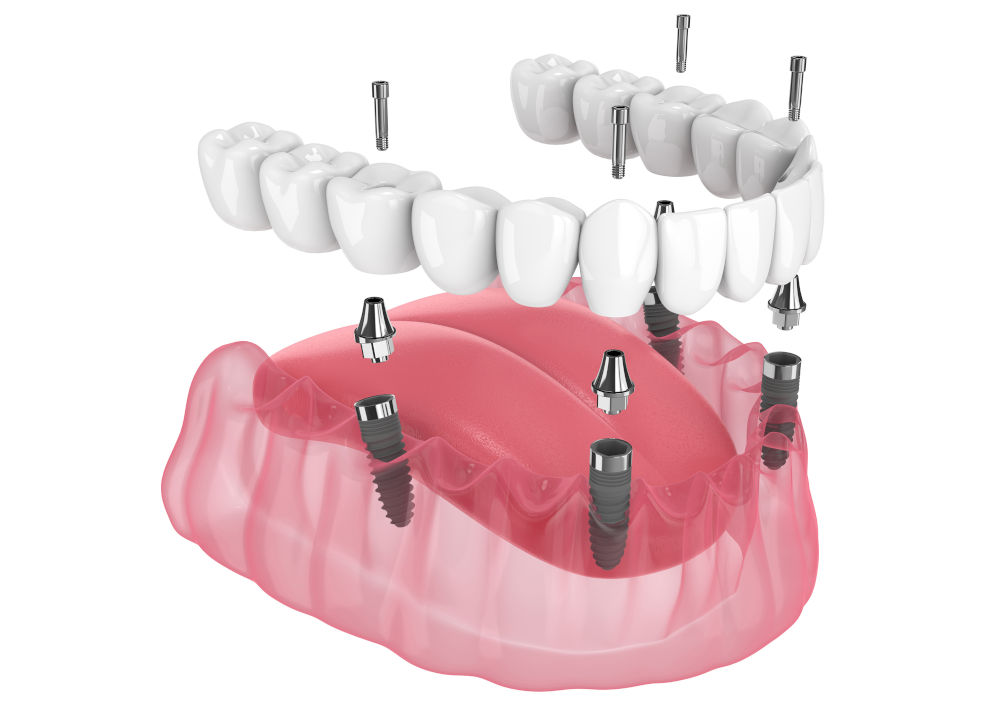
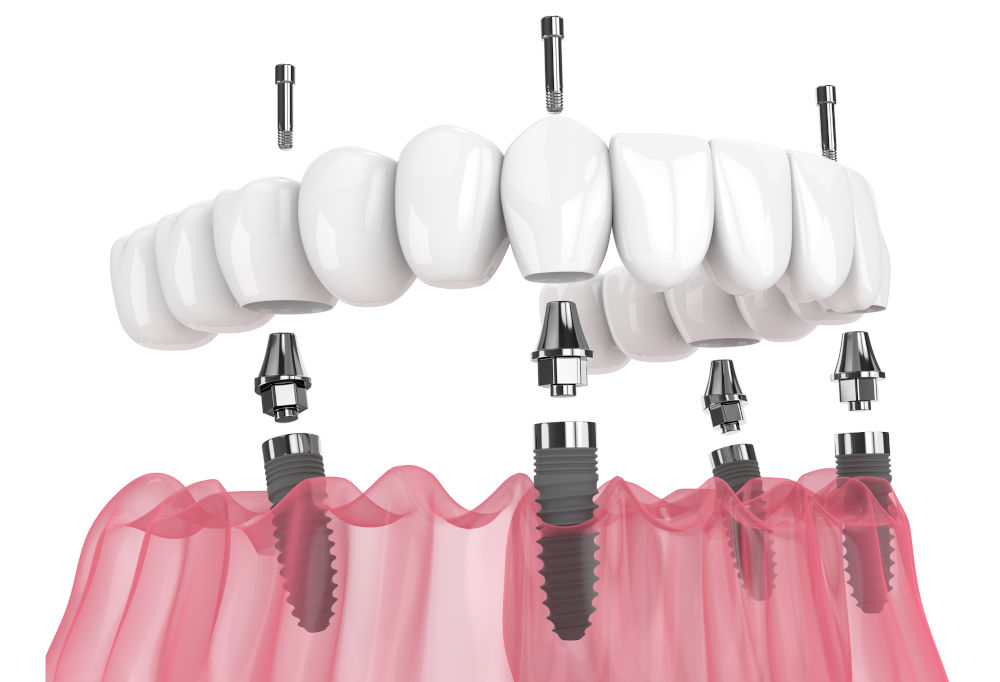
All-on-4 is a full-arch dental implant solution that uses four strategically placed titanium implants to support a complete bridge of permanent teeth. Unlike replacing teeth one by one, which can cost $3,000–$6,500 per tooth, All-on-4 restores an entire arch with just four implants, making it significantly more efficient per tooth.
The name describes the geometry: two implants are placed vertically toward the front of the jaw, and two are angled at up to 45 degrees toward the back. That angled placement is clinically important; it distributes biting forces more evenly across the arch and, in most cases, allows the posterior implants to anchor into denser bone without requiring extensive bone grafting.
What makes this procedure more expensive than removable dentures isn't just the surgery. It's the combination of:
- Precision planning using CBCT 3D imaging before any surgery takes place
- The surgical placement of four titanium implant posts into the jawbone
- Fabrication of a temporary prosthesis was performed on the same day
- The osseointegration period (3–6 months), during which implants fuse with the bone
- Fabrication and placement of the final permanent prosthesis, typically zirconia or high-grade acrylic
- Follow-up appointments across the full treatment timeline
Each of these components involves significant clinical time, laboratory work, and premium materials. The cost reflects all of it.
How Much Does All-on-4 Cost in North York, Ontario in 2026?
The ranges below are based on current Ontario and Toronto-area pricing as confirmed by multiple dental practices in 2025–2026.
Per arch (upper or lower jaw)
| Treatment Scenario | Estimated Cost in North York |
|---|---|
| Standard All-on-4 (acrylic prosthesis) | $20,000–$27,000 |
| Premium All-on-4 (zirconia prosthesis) | $25,000–$35,000 |
| Complex case with bone grafting | Add $2,000–$8,000 |
| Extractions of remaining teeth (if needed) | Add $150–$600 per tooth |
Full-mouth restoration (both arches)
| Treatment Scenario | Estimated Cost |
|---|---|
| Standard full-mouth All-on-4 | $40,000–$54,000 |
| Premium zirconia full-mouth | $50,000–$60,000+ |
| Complex case | $55,000–$70,000+ |
These ranges are consistent with current pricing at implant clinics across Toronto and North York. All-on-4 full-arch solutions in Canada typically cost $20,000–$35,000 per jaw, a range that aligns with what North York patients encounter in practice.
Why do prices vary within these ranges?
Several factors determine where your specific case falls in the range:
Prosthesis material. Acrylic is more affordable and appropriate for many cases. Zirconia, a ceramic material known for its strength and natural appearance, costs more but offers greater durability and aesthetics, particularly for patients who want the most natural-looking outcome.
Bone condition. Patients with significant bone loss may require bone grafting before or at the time of implant placement. This adds both cost and time to treatment. One of the design advantages of All-on-4 is that the angled posterior implants often reach denser bone in the back of the jaw, allowing many patients with moderate bone loss to proceed without grafting.
Number of extractions. If you still have remaining teeth in the arch that need removal before implant placement, each extraction adds to the total cost.
Sedation type. All-on-4 surgery is typically performed under local anesthesia. Patients who prefer deeper sedation, IV sedation or conscious sedation will incur additional fees. Sedation options are available at Bayview Smile Centre for patients who want a more comfortable experience.
Implant brand and components. Premium implant systems from established manufacturers (Nobel Biocare, Straumann) carry higher component costs than generic systems, but offer better long-term data on integration rates and longevity.
Clinic location and overhead. North York dental practices face higher operational costs than suburban or rural clinics, which is typically reflected in pricing.
What Is Actually Included in the All-on-4 Price?
This is where patients are sometimes surprised. Advertised prices don't always include everything required for a complete treatment. Before committing to any clinic, ask for an itemized treatment plan.
A complete All-on-4 quote should include:
| Included in a complete All-on-4 package | Often quoted separately |
|---|---|
| CBCT 3D imaging and treatment planning | Tooth extractions |
| Four titanium implant posts | Bone grafting (if needed) |
| Abutments connecting implants to the prosthesis | Sinus lift (upper jaw, if needed) |
| Temporary prosthesis (placed same day) | IV or conscious sedation |
| Final permanent prosthesis | Additional follow-up visits |
| Post-surgical follow-up appointments |
At Bayview Smile Centre Dental, we provide a full written cost estimate before any treatment begins. If extractions or additional procedures are anticipated based on your imaging, those costs are identified upfront, not after surgery.
How Does the All-on-4 Procedure Work?
Understanding the process helps patients know exactly what they're committing to and what "teeth in a day" actually means.
Step 1: Consultation and 3D imaging
The process begins with a comprehensive examination that includes a CBCT (cone beam computed tomography) scan, a 3D X-ray that shows the jawbone structure, bone density, nerve locations, and sinus anatomy in detail. This imaging is essential for precise implant planning.
At this appointment, your dentist evaluates whether you're a suitable candidate, identifies any teeth that need extraction, and determines whether bone grafting is required.
Step 2: Treatment planning
Using the 3D scan data, the exact position and angle of each of the four implants is planned digitally before surgery. This planning stage determines how the angled posterior implants will be positioned to avoid nerve canals and maximize bone contact.
Step 3: Surgery day, implant placement, and temporary teeth
The surgical appointment typically takes 2–4 hours per arch. Under local anesthesia (and sedation if chosen), any remaining teeth are extracted, and the four implants are placed according to the pre-surgical plan.
Following implant placement, a temporary prosthesis, a full-arch set of functional teeth, is attached on the same day. This is what patients mean by "teeth in a day." You leave the clinic with a complete set of functioning teeth.
The temporary prosthesis is designed for light function during healing. Hard, crunchy, or sticky foods should be avoided for the first few months.
Step 4: Osseointegration (3–6 months)
Osseointegration is the biological process by which the titanium implant surface fuses with the surrounding bone. Bone cells grow directly onto the implant, creating a stable foundation that enables the final prosthesis.
During this period, patients attend regular check-up appointments to monitor healing, implant stability, and gum health. Most patients continue to function normally in daily life, including at work, in social activities, and when eating soft to moderate foods, throughout this stage.
Step 5: Final prosthesis placement
Once the implants have fully integrated, confirmed through clinical assessment and imaging, the final permanent prosthesis is fabricated in a dental laboratory and placed at your clinic.
This is the completed restoration: a fixed, non-removable arch of teeth that looks, feels, and functions like natural teeth. Unlike traditional dentures, the final All-on-4 prosthesis cannot be removed by the patient.
Step 6: Ongoing maintenance
All-on-4 implants require regular professional cleanings and dental check-ups. Specialized tools, including water flossers and implant-specific brushing techniques, are used to clean beneath the prosthesis at home. With proper maintenance, All-on-4 implants are designed to last decades.
All-on-4 vs Traditional Dentures: An Honest Comparison
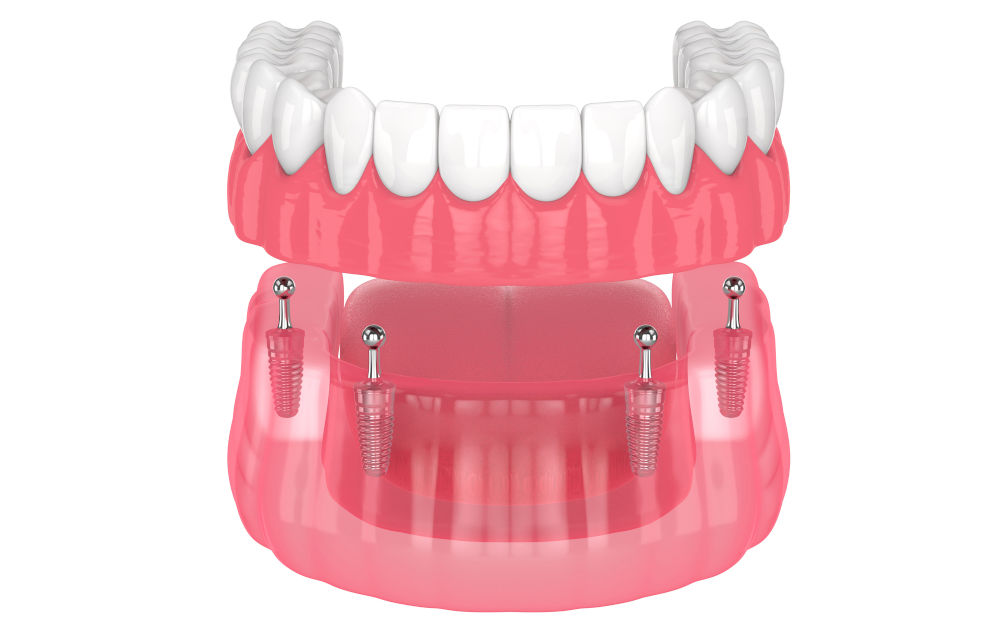
For patients considering All-on-4, the most common comparison is traditional removable dentures. Both replace a full arch of missing teeth, but they work very differently.
| Factor | All-on-4 Implants | Traditional Dentures |
|---|---|---|
| Fixation | Fixed permanently in the jaw | Removable, rests on gums |
| Bone preservation | Implants stimulate the jawbone, preventing bone loss | No stimulation — bone continues to shrink |
| Chewing efficiency | Near-natural biting force | Approximately 20–25% of natural force |
| Stability | No movement during eating or speaking | Can shift; adhesives are often required |
| Longevity | Decades with proper care | Require relining every 2–3 years; replacement every 5–7 years |
| Facial structure | Maintains bone volume and facial contour | Progressive bone loss changes the facial profile over time |
| Maintenance | Daily home cleaning + annual professional check | Regular cleaning, relining, and periodic replacement |
| Upfront cost | $20,000–$35,000 per arch | $1,500–$4,000 |
| Long-term cost | Lower — fewer replacements and adjustments | Higher — ongoing relining, replacement, and adhesives |
The upfront cost difference is real and significant. But so is the long-term picture. Because dentures sit on the gums rather than being anchored to the bone, they provide no stimulation to the jawbone. Without that stimulation, bone resorption continues to change the shape of the jaw, affect facial volume, and cause dentures to fit progressively worse over time.
All-on-4 implants address bone loss directly. Once integrated, the implants function as artificial tooth roots, delivering the mechanical stimulation the jawbone needs to maintain its density and shape.
For patients who have been wearing ill-fitting dentures, this often represents a significant quality-of-life improvement, the ability to eat without restriction, speak without worrying about movement, and go through daily life without thinking about their teeth.
Are You a Candidate for All-on-4?
Not every patient is a good candidate, and an honest consultation will make this clear. The primary factors that determine eligibility are:
- Tooth loss or failing teeth. All-on-4 is designed for patients who have lost all or most teeth in an arch, or whose remaining teeth cannot be saved and require extraction.
- Adequate bone volume. Sufficient jawbone density is needed to anchor the implants. One of the clinical advantages of the All-on-4 technique is that the angled posterior implants are designed to reach the denser bone at the back of the jaw, making the procedure viable for many patients with moderate bone loss. In some cases, severe bone loss can still be addressed, though it may require additional procedures.
- General health. Patients must be medically suitable for oral surgery. Conditions that may require individual assessment include uncontrolled diabetes, active cancer treatment, or medications that affect bone metabolism. These are not automatic exclusions — each case is evaluated on its own merits.
- Non-smoker or willingness to stop. Smoking significantly increases the risk of implant failure. Most clinicians require patients to stop smoking before and after surgery.
- Commitment to oral hygiene. Long-term success depends on maintaining proper hygiene around the implant-supported prosthesis. Patients need to be committed to the cleaning routine their dentist prescribes.
If you're currently wearing dentures but finding them uncomfortable or unstable, you may already be a good candidate. A comprehensive examination and CBCT imaging at Bayview Smile Centre will determine whether All-on-4 is appropriate for your specific anatomy.
Does Insurance Cover All-on-4 in Ontario?
This is one of the most common questions, and the answer requires some nuance.
Most standard dental insurance plans in Canada do not cover dental implants, including All-on-4, as a covered procedure. Implants are typically classified as an elective or cosmetic treatment , placing them outside the scope of most employer benefit plans.
However, some premium plans may offer partial reimbursement for components such as the prosthetic crown or bridge . Annual maximums on most plans ($1,000–$2,000) are rarely sufficient to make a significant dent in All-on-4 costs. If you have coverage, it's worth checking your policy and confirming which procedure codes are covered before your consultation.
What about the Canadian Dental Care Plan (CDCP)?
The CDCP, the federal plan for uninsured Canadians with household income below $90,000, has limited coverage for dental implants as of 2026. The plan primarily covers essential oral health procedures rather than full surgical implant treatment. Patients interested in CDCP coverage should review the information available on the official Government of Canada CDCP page and confirm their eligibility with a registered CDCP provider.
If you're a CDCP patient at Bayview Smile Centre, we can review your specific coverage before any treatment begins. Our CDCP page provides more details on what the plan covers at our clinic.
Tax credit. Dental implants qualify as a medical expense for the Canadian federal medical expense tax credit. On a $25,000 procedure, the federal credit alone (15%) represents $3,750 in potential tax savings, a meaningful offset worth discussing with your accountant.
Financing and Payment Options for All-on-4 in North York
The cost of All-on-4 treatment is high, but it doesn't have to be paid as a single lump sum.
At Bayview Smile Centre Dental, we understand that most patients aren't expecting to pay for a full-arch implant procedure out of pocket all at once. Our financing options are designed to make All-on-4 accessible to patients who are a clinical fit for the treatment, regardless of their immediate cash position.
Options available to patients at our North York clinic include:
- Monthly payment plans. Spreading the cost over 12, 24, or 36 months brings the monthly obligation into a manageable range for most patients. A $25,000 treatment plan, divided over 36 months, is approximately $700 per month, comparable to a car payment for a solution that can last for decades.
- Third-party financing. We work with financing partners who specialize in dental procedures and offer structured loan options with defined interest terms.
- Phased treatment. In some cases, it's possible to complete one arch first, allowing patients to manage costs in stages before proceeding to the second arch at a later date.
- Tax planning. Patients who claim All-on-4 as a medical expense on their Canadian tax return may recover a meaningful portion of it through the federal and provincial medical expense tax credits.
How to Get Started at Bayview Smile Centre in North York
If you're considering All-on-4, the right first step is a consultation, not a commitment. The consultation exists to determine whether you're a clinical candidate, to show you the imaging of your jaw, and to give you a clear, written cost estimate for your specific case.
Here's what to expect when you contact us:
- Step 1: Book a consultation. Call Bayview Smile Centre Dental or book online. Let us know you're interested in All-on-4 or full-arch implants.
- Step 2: Examination and CBCT imaging. At the consultation, we perform a clinical examination and take a 3D CBCT scan of your jaw. This imaging allows us to provide you with a meaningful cost estimate and determine whether All-on-4 is appropriate.
- Step 3: Written treatment plan and cost estimate. You receive a clear, itemized treatment plan — including all anticipated costs — before any treatment is scheduled. If extractions or grafting are needed, those costs are identified at this stage.
- Step 4: Begin treatment when you're ready. There is no pressure to proceed. Once you've had time to review the plan and explore financing options, you decide when to schedule.
- Bayview Smile Centre Dental, located on Bayview Avenue in North York, is accepting new patients for All-on-4 consultations.
Frequently Asked Questions
How much do All-on-4 dental implants cost in North York?
In North York and across the Toronto area, All-on-4 treatment typically costs between $20,000 and $35,000 CAD per arch. The exact cost depends on the prosthesis material chosen (acrylic vs zirconia), whether extractions or bone grafting are needed, and the complexity of your case. A full written cost estimate is provided after your consultation and CBCT imaging.
What is the difference between All-on-4 and regular dental implants?
Traditional individual implants replace one tooth per implant post. All-on-4 uses just four implants to support an entire arch of teeth — making it more efficient and less costly per tooth when full-arch replacement is needed. It also requires less bone volume, allowing many patients with moderate bone loss to qualify without bone grafting.
How long does the All-on-4 procedure take from start to finish?
The surgical appointment — where implants are placed, and temporary teeth are fitted — typically takes 2–4 hours per arch. The full treatment timeline from consultation to final prosthesis placement is 3–6 months, to allow for osseointegration. Most patients receive functional temporary teeth on the same day as surgery.
Does OHIP or dental insurance cover All-on-4 in Ontario?
OHIP does not cover dental implants. Most standard dental insurance plans do not include All-on-4 as a covered procedure, though some premium plans offer partial reimbursement for prosthetic components. The Canadian Dental Care Plan (CDCP) has limited implant coverage in 2026. All-on-4 expenses qualify for the Canadian federal medical expense tax credit.
Is All-on-4 permanent?
The implant posts are permanent — once integrated with the jawbone, they are designed to last for decades or a lifetime with proper care. The prosthetic bridge attached to the implants is also long-lasting, but may eventually require replacement over many years, depending on the material used and wear patterns.
Can I eat normally after All-on-4?
With the temporary prosthesis in place (during the first 3–6 months), a soft diet is recommended to protect the healing implants. Once the final permanent prosthesis is placed, most patients can eat a full, unrestricted diet — one of the key advantages over traditional dentures.
How does All-on-4 compare to dentures in terms of long-term cost?
The upfront cost of All-on-4 is significantly higher than that of removable dentures. However, dentures require relining every 2–3 years and full replacement every 5–7 years, in addition to ongoing adhesive costs. All-on-4 implants, when properly maintained, can last for decades without replacement, making the long-term cost comparison more favourable than the upfront difference suggests.
Am I a candidate if I have bone loss?
Many patients with moderate bone loss qualify for All-on-4. The angled placement of the posterior implants is specifically designed to access denser bone in the back of the jaw, often allowing the procedure to proceed without bone grafting. A CBCT scan at your consultation will determine your eligibility.