
Dental Crown Cost in Ontario: What You Can Expect to Pay
How much does a dental crown really cost in Ontario, and why does one patient pay $900 while another ends up paying nearly twice as much?
The answer isn’t as straightforward as it seems. The cost is shaped not only by the procedure itself, but also by the materials used, the dental lab technology, the dentist’s expertise, and even the clinic’s location. And here’s the key point: trying to save money in the short term can end up costing significantly more down the line.
In this article, we’ll break down real dental crown costs in Ontario and across Canada, explain what influences pricing, compare different types of crowns, and show you where you can realistically reduce expenses without compromising your oral health.
Key Takeaways
- The average cost of a dental crown in Ontario typically ranges from $900 to $1,500 per tooth, depending on materials, clinic location, and complexity.
- Across Canada, the cost per tooth varies based on lab fees, dentist expertise, and whether multiple crowns are needed.
- Without insurance, patients should expect to pay full out-of-pocket costs, but many clinics offer flexible payment plans to improve accessibility.
- Urban clinics (like Toronto) often charge more than suburban practices due to higher operational costs.
- The material used (porcelain, zirconia, metal) is one of the biggest cost drivers.
Find our Dental Clinic Near You
What is the average dental crown cost in Ontario?
When patients first ask about dental crowns, they’re usually expecting a simple number. But the reality? The cost of a dental crown in Ontario is influenced by several factors, and understanding them can help you avoid unexpected bills.
Let’s start with the typical range. In Ontario, most dental clinics charge between $900 and $1,500 per crown. This aligns closely with fee guides published by provincial dental associations, which many clinics use as a baseline. However, that range isn’t fixed; it fluctuates depending on several important variables.
What affects the price of a dental crown?
The cost of a crown isn’t just about the procedure itself. It’s a combination of clinical expertise, materials, and lab work. Here’s what plays the biggest role:
-
Material used
- Porcelain-fused-to-metal (PFM): mid-range pricing
- All-ceramic or porcelain: higher cost due to aesthetics
- Zirconia: often the most expensive due to durability
-
Location of the clinic
- Urban areas like Toronto tend to have higher fees
- Suburban or smaller-town clinics may offer lower pricing
-
Laboratory costs
- Crowns are often fabricated in specialized dental labs
- High-quality labs increase precision — and cost
-
Case complexity
- Damaged or root canal–treated teeth may require additional work
- More chair time = higher total cost
Urban vs suburban pricing differences
Now, here’s something many patients don’t consider: geography matters.
In larger cities, dental practices face:
- Higher rent and operational costs
- Increased demand for cosmetic dentistry
- Access to premium dental labs
This often pushes crown prices closer to the upper end of the $1,500 range.
In contrast, suburban clinics may:
- Offer more competitive pricing
- Have lower overhead costs
- Provide similar clinical quality at reduced fees
So, the same crown could cost noticeably different amounts depending on where you go.
Typical cost breakdown in Ontario
To make things clearer, here’s a simplified comparison:
| Factor | Lower Range ($900) | Higher Range ($1,500) |
|---|---|---|
| Material | Metal / basic PFM | Zirconia / all-ceramic |
| Location | Suburban clinic | Major city clinic |
| Lab quality | Standard lab | Premium lab |
| Complexity | Straightforward case | Complex restoration |
Why prices vary between clinics
Even within the same city, prices can differ. That’s because each clinic sets fees based on:
- Dentist’s experience and specialization
- Technology used (digital scans vs traditional impressions)
- Time allocated per patient
- Overall patient care approach
And here’s the important part: higher cost doesn’t always mean better care, but extremely low pricing can sometimes indicate compromises in materials or lab quality.
How much does a crown cost per tooth in Canada?
Zooming out from Ontario to Canada as a whole, the cost per tooth for a dental crown follows a similar pattern, though with regional nuances worth understanding.
On average, Canadians can expect to pay $900 to $1,500 per tooth, though in some provinces or premium clinics, costs may exceed $1,600–$2,000.
Cost per tooth: what does it actually include?
When dentists quote a price “per tooth,” it usually includes:
- Tooth preparation
- Digital or physical impressions
- Temporary crown placement
- Final crown fabrication and placement
- Follow-up adjustments
However, some procedures may not be included, which can increase costs.
Additional costs to consider
Not every crown is straightforward. Depending on your situation, you might also need:
- Core buildup (if the tooth is heavily damaged)
- Root canal treatment (if the pulp is infected)
- Post placement for added support
These procedures can add $150 to $800+ to the total cost per tooth.
Single vs multiple crowns
Here’s where pricing dynamics change.
Single crown
- Typically falls within the standard range
- No bulk discount in most cases
- Lab and setup costs are applied fully
Multiple crowns
- May offer slight cost efficiency per tooth
- Lab processes can be streamlined
- Treatment planning is more complex
But don’t assume major discounts; dentistry is highly individualized, and each tooth requires precision work.
Role of the dentist's expertise
Experience matters, and it can influence pricing.
Dentists with advanced training or specialization may:
- Charge higher fees
- Use premium materials and labs
- Deliver longer-lasting restorations
And honestly, this is often where value outweighs cost. A poorly fitted crown can lead to complications like:
- Bite issues
- Gum irritation
- Crown failure
Which ultimately means more expenses down the line.
National comparison table
| Scenario | Average Cost per Tooth |
|---|---|
| Basic crown (Canada) | $900–$1,200 |
| Premium materials | $1,200–$1,500+ |
| Complex case | $1,500–$2,000+ |
| With additional procedures | $1,200–$2,500+ total |
Material choice and long-term value
Now, an important question: should you always choose the cheapest option?
Not necessarily.
- Metal crowns are durable but less aesthetic
- Porcelain crowns look natural but may wear faster
- Zirconia crowns offer both strength and aesthetics
The right choice depends on:
- Tooth location (front vs back)
- Bite pressure
- Patient preferences
And yes, budget plays a role, but cutting corners on material can lead to earlier replacement.
How much is a dental crown without insurance in Ontario?
Paying out of pocket changes everything. Without insurance, the full financial responsibility falls on the patient, and that can feel overwhelming at first.
But once you break it down, the picture becomes clearer.
Full out-of-pocket costs
Without insurance, patients in Ontario typically pay:
- $900 to $1,500 per crown (base cost)
-
Additional procedures if needed:
- Core buildup: $150–$400
- Root canal: $500–$1,200
So, realistically, the total cost per tooth can range from $1,200 to $2,500+, depending on complexity.
Step-by-step: what you’re paying for
Understanding the process helps justify the cost.
Step 1: Examination and diagnosis
The dentist evaluates the tooth using X-rays and clinical assessment.
Step 2: Tooth preparation
Damaged tissue is removed, and the tooth is shaped for the crown.
Step 3: Impressions
Digital scans or moulds are taken to ensure a precise fit.
Step 4: Temporary crown
A temporary solution protects the tooth while the permanent crown is made.
Step 5: Final placement
The custom crown is cemented and adjusted for bite and comfort.
Each step involves time, expertise, and materials, which collectively determine the final price.
Payment plans and financing options
Here’s the good news: many clinics understand that not everyone has insurance.
Patients often have access to:
- Monthly payment plans
- Third-party financing options
- Staged treatment approaches
This allows patients to receive necessary care without delaying treatment, which is crucial because postponing a crown can lead to:
- Tooth fractures
- Infection
- Tooth loss
And those outcomes are significantly more expensive to treat.
Cost vs risk: delaying treatment
It’s tempting to postpone a crown due to cost. But clinically, that’s risky.
A weakened tooth without a crown is vulnerable to:
- Cracking under pressure
- Bacterial infiltration
- Structural failure
And what starts as a $1,200 procedure can quickly turn into:
- A root canal + crown
- Or even an implant costing $3,000–$5,000+
What factors influence the cost of a dental crown?
You might think a dental crown is a standardized procedure, one tooth, one solution, one price. But in practice, the cost can vary significantly, even within the same city. Why? Because a crown isn’t a single product, it’s a combination of clinical decisions, materials, and precision work.
Let’s break down the key factors that influence what you ultimately pay.
Material selection: the biggest cost driver
If there’s one factor that consistently impacts pricing, it’s the material used for the crown. Different materials offer different balances of durability, aesthetics, and cost.
- Porcelain / ceramic : Highly aesthetic, ideal for front teeth
- Zirconia : Extremely strong, suitable for both front and back teeth
- Metal (gold or alloys) : Durable but less aesthetic
- Porcelain-fused-to-metal (PFM) : A hybrid option balancing strength and appearance
Higher-end materials like zirconia typically require more advanced manufacturing processes, which increase costs.
Dentist experience and expertise
Not all crowns are created equal, and neither are the clinicians placing them.
Dentists with extensive experience or advanced training may:
- Use more precise preparation techniques
- Work with premium dental labs
- Deliver better long-term outcomes
This expertise can influence pricing. But here’s the nuance: a well-placed crown can last over a decade, so the value often outweighs the upfront difference.
Dr. Mina Ibrahim DDS explains:
“A crown is not just a cap; it’s a structural restoration. The precision in preparation and placement directly affects how long it will last and how comfortable it feels for the patient.”
Dental laboratory technology
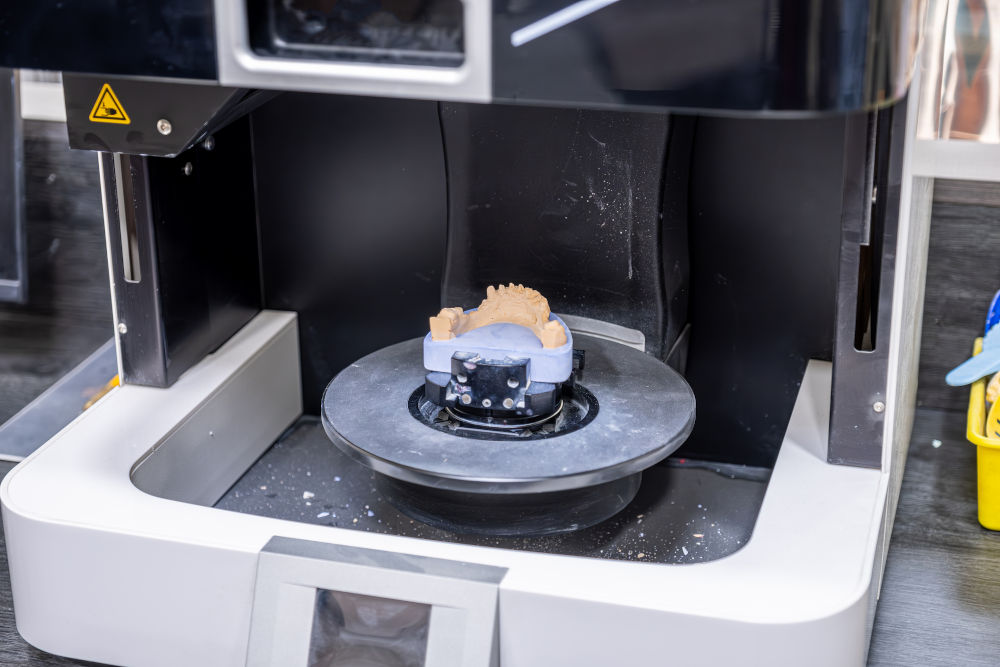
Most crowns aren’t made in the clinic; they’re fabricated in specialized dental labs. And the technology used there matters.
Modern labs may use:
- CAD/CAM technology (computer-aided design and manufacturing)
- High-precision milling machines
- Advanced ceramic layering techniques
These innovations improve fit and durability, but they also increase production costs.
Geographic location of the clinic
Location plays a surprisingly large role.
Clinics in urban centres often have:
- Higher rent and staffing costs
- Access to premium labs and technology
- Greater demand for cosmetic dentistry
As a result, crown prices in cities tend to be higher than in suburban or rural areas.
Case complexity and oral condition
Not every tooth is ready for a crown right away.
Some cases require additional procedures, such as:
- Removing decay or old restorations
- Building up the tooth structure
- Managing gum or bite issues
The more complex the case, the more time and expertise are required, which affects the final cost.
Cost factors at a glance
| Factor | Impact on Cost | Why It Matters |
|---|---|---|
| Material | High | Determines durability and aesthetics |
| Dentist experience | Medium–High | Influences precision and longevity |
| Lab technology | Medium | Affects fit and manufacturing quality |
| Location | Medium | Reflects operational costs |
| Case complexity | High | Requires additional procedures/time |
A broader perspective
What’s often overlooked is how these factors interact. For example, a high-end material combined with advanced lab technology and an experienced dentist will naturally sit at the higher end of the price spectrum.
But that combination also tends to produce:
- Better fit
- Longer lifespan
- Fewer complications
And that shifts the conversation from “cost” to “long-term value.”
What are the different types of dental crowns and their costs?
Standing in a dental clinic, you might hear several crown options presented: porcelain, metal, and PFM. It can feel overwhelming. But each type serves a specific purpose, and the cost differences stem from real clinical advantages.
Let’s unpack them one by one.
Porcelain (all-ceramic) crowns
Porcelain crowns are widely chosen for their natural appearance. They mimic the translucency of real teeth, making them ideal for visible areas.
Typical cost in Canada:
- $1,000–$1,500 per tooth
Best suited for:
- Front teeth
- Patients prioritizing aesthetics
However, they may not be as strong as zirconia under heavy biting pressure.
Dr. Mitchell Dzaldov DDS notes:
“Zirconia crowns have transformed restorative dentistry. They offer the strength we need for molars while still maintaining a natural appearance, which wasn’t always possible in the past.”
Metal crowns (gold or alloy)
Metal crowns are among the oldest and most durable options.
Typical cost:
- $900–$1,300
Pros:
- Long lifespan
- Minimal wear on opposing teeth
Cons:
- Highly visible, not aesthetic
These are often used for molars, where visibility is less important.
Porcelain-fused-to-metal (PFM) crowns
PFM crowns combine a metal base with a porcelain outer layer.
Typical cost:
- $1,000–$1,400
They offer:
- Better aesthetics than metal
- Greater strength than pure porcelain
However, over time, the metal margin may become visible near the gum line.
Crown types and costs
| Crown Type | Average Cost (Canada) | Aesthetics | Durability | Best Use Case |
|---|---|---|---|---|
| Porcelain / Ceramic | $1,000–$1,500 | Excellent | Moderate | Front teeth |
| Metal | $900–$1,300 | Low | Excellent | Molars |
| PFM | $1,000–$1,400 | Good | Good | General use |
Choosing the right type: more than just price
Patients often focus on cost first, which is understandable. But clinically, the decision should also consider:
- Tooth location
- Bite force
- Aesthetic expectations
- Longevity goals
What’s the takeaway? The “best” crown isn’t the cheapest or the most expensive — it’s the one that fits your specific clinical situation.
What is included in the total cost of getting a dental crown?
At first glance, the price of a dental crown might seem like a single line item. But in reality, it covers a multi-step clinical process that ensures the restoration fits, functions, and lasts.
Understanding what’s included helps clarify where your money is going.
Step-by-step breakdown of the procedure
Step 1: Examination and diagnosis
Before any treatment begins, the dentist assesses the tooth.
This typically includes:
- Clinical examination
- Digital or traditional X-rays
- Evaluation of surrounding teeth and gums
This step ensures that a crown is the right solution.
Step 2: Tooth preparation
The tooth is reshaped to accommodate the crown.
This involves:
- Removing decay or damaged structure
- Creating space for the crown material
- Ensuring proper alignment with neighbouring teeth
Precision here is critical — even minor inaccuracies can affect the final fit.
Step 3: Impressions or digital scans
Next, the dentist captures the exact shape of the prepared tooth.
Modern clinics often use:
- Digital scanners for high accuracy
- Traditional impressions in some cases
These records are sent to the dental lab for fabrication.
Step 4: Temporary crown placement
A temporary crown is placed to protect the tooth while the permanent one is being made.
This step:
- Prevents sensitivity
- Maintains function
- Preserves aesthetics
Step 5: Final crown placement
Once the permanent crown is ready, it is carefully fitted and bonded.
Adjustments may include:
- Bite alignment
- Contour refinement
- Polishing
The goal is a seamless integration with your natural teeth.
Step 6: Follow-up and adjustments
Some clinics include follow-up visits to ensure:
- Proper fit
- Patient comfort
- Long-term stability
What’s included vs what may cost extra
Not all components are always bundled at a single price.
Here’s a helpful comparison:
| Included in Base Cost | May Be Additional Cost |
|---|---|
| Examination | Root canal treatment |
| Tooth preparation | Core buildup |
| Impressions/scans | Post placement |
| Temporary crown | Gum treatment (if needed) |
| Final crown placement | Emergency visits |
Why transparency matters
One of the most important aspects of dental care is cost clarity. Patients should always feel comfortable asking:
- What’s included in the quoted price?
- Are there potential additional costs?
- What happens if complications arise?
Clear communication helps avoid surprises and builds trust.
Are there ways to reduce the cost of a dental crown?
Let’s be honest, when patients hear that a dental crown can cost over $1,000, the first question is almost always: “Is there any way to lower that?” The answer is yes, but it requires understanding where flexibility exists and where it doesn’t.
Reducing the cost of a dental crown isn’t about cutting corners. It’s about making informed decisions that balance affordability with long-term oral health.
Insurance coverage: the most common cost reducer
If you have dental insurance, it can significantly reduce your out-of-pocket expenses. Most plans classify crowns as a major restorative procedure, which typically means:
- Coverage ranges from 50% to 80%
- Annual maximums apply (often $1,000–$2,000)
- Pre-authorization may be required
But here’s an important nuance: insurance companies often base reimbursements on standard fee guides, not necessarily what your clinic charges. So even with coverage, you may still pay a portion out of pocket.
And yes, timing matters. Some patients strategically plan treatments across calendar years to maximize their benefits.
Payment plans and financing options
Not everyone has insurance, and clinics know that.
Many dental practices, including Bayview Smile Centre Dental, offer:
- Flexible monthly payment plans
- Partnerships with third-party financing providers
- Phased treatment approaches
This allows patients to spread the cost over time rather than pay everything up front.
And honestly, this can make a big difference. A $1,200 procedure feels very different when broken into manageable monthly payments.
Dental schools and teaching clinics
This option is often overlooked, but it can offer significant savings.
Dental schools in Canada provide treatment at reduced costs because:
- Procedures are performed by supervised students
- Appointments may take longer
- Cases are carefully reviewed by experienced instructors
Costs can be 30–50% lower than those in private clinics.
However, there are trade-offs:
- Longer treatment times
- Limited appointment availability
- Not ideal for urgent or complex cases
Still, for patients with flexible schedules, this can be a practical solution.

Preventive care: the most effective long-term strategy
Here’s where things get interesting: the best way to reduce the cost of a crown is often to avoid needing one in the first place.
Preventive care includes:
- Regular dental checkups
- Professional cleanings
- Early treatment of cavities
- Good oral hygiene habits at home
Why does this matter?
Because a small filling might cost a fraction of what a crown costs. But if decay progresses or a tooth fractures, the treatment becomes far more complex — and expensive.
So while preventive care doesn’t directly reduce the cost of a crown, it reduces the likelihood of needing one at all.
Material and treatment choices
In some cases, cost can be adjusted by selecting different materials.
For example:
- Choosing PFM instead of zirconia may reduce costs
- Using a crown only when clinically necessary (vs cosmetic preference)
However, and this is crucial, material decisions should always be guided by clinical need, not just budget.
A cheaper option that fails sooner may lead to:
- Replacement costs
- Additional procedures
- Greater long-term expense
Practical strategies summary
| Strategy | Potential Savings | Considerations |
|---|---|---|
| Insurance | High (50–80%) | Annual limits apply |
| Payment plans | Medium (cash flow ease) | Total cost remains similar |
| Dental schools | High (30–50%) | Longer treatment times |
| Preventive care | Long-term savings | Requires consistency |
| Material selection | Moderate | Must align with clinical needs |
What should you expect to pay for a dental crown in Ontario?
So, after all the numbers, comparisons, and variables what’s the real takeaway?
If you’re planning to get a dental crown in Ontario, a realistic expectation is:
- $900 to $1,500 per tooth for standard cases
- $1,200 to $2,500+ if additional procedures are required
- Lower out-of-pocket costs if insurance is involved
But those numbers only tell part of the story.
What actually determines your final cost?
By now, it’s clear that pricing depends on a combination of factors:
- The material you choose
- The complexity of your case
- The experience of your dentist
- The location of the clinic
- Whether additional procedures are needed
And these factors don’t exist in isolation they interact in ways that shape both cost and outcome.
What patients should keep in mind?
Before proceeding with treatment, it’s worth asking a few key questions:
- What exactly is included in the quoted price?
- Are there any potential additional costs?
- Which crown material is best for my specific case?
- How long is the crown expected to last?
These questions help shift the focus from price alone to overall value and longevity.
Cost vs long-term outcome
It’s tempting to delay treatment due to cost, which is understandable. But clinically, postponing a necessary crown can lead to:
- Tooth fractures
- Infection
- Tooth loss
And those outcomes often require:
- Root canals
- Implants
- More complex (and expensive) procedures
So the real comparison isn’t just between different crown prices, it’s between timely treatment and future complications.
Final summary table
| Scenario | Expected Cost Range |
|---|---|
| Basic crown (Ontario) | $900–$1,500 |
| Premium materials | $1,200–$1,600+ |
| Complex case | $1,500–$2,500+ |
| With insurance | Reduced by 50–80% |
Final reflection
A dental crown isn’t just a repair, it’s a long-term investment in your oral health. And like most investments, the goal isn’t simply to minimize cost, but to maximize value.
At Bayview Smile Centre Dental, the focus is always on:
- Clear communication
- Evidence-based treatment
- Long-term patient outcomes
FAQ
How long does a dental crown last?
A dental crown typically lasts 10 to 15 years, but with proper care, it can last even longer. Longevity depends on material choice, oral hygiene, and bite forces.
Is a dental crown worth the cost?
Yes, in most cases. A crown protects a weakened tooth from further damage and can prevent more expensive treatments like implants or extractions.
Does insurance cover dental crowns in Ontario?
Most dental insurance plans cover 50% to 80% of the cost, but coverage depends on your policy and annual limits.
Can I delay getting a dental crown?
Delaying treatment increases the risk of tooth fracture, infection, or tooth loss. This can lead to significantly higher costs later.
Which type of crown is best?
It depends on your needs. Zirconia offers durability, while porcelain provides the best aesthetics. Your dentist will recommend the most suitable option.
Are cheaper crowns a good idea?
Lower-cost crowns may use less durable materials or lower-quality lab work. This can lead to earlier failure and higher long-term costs.